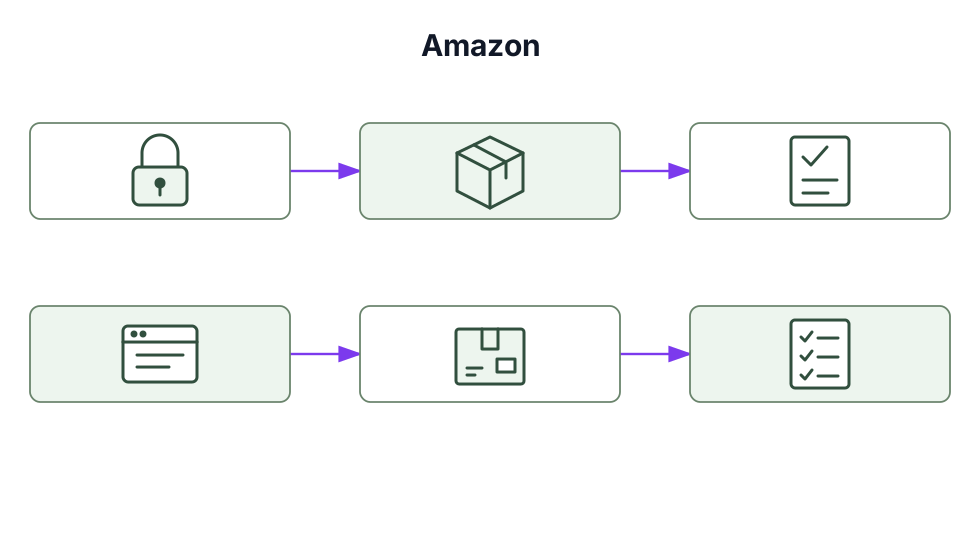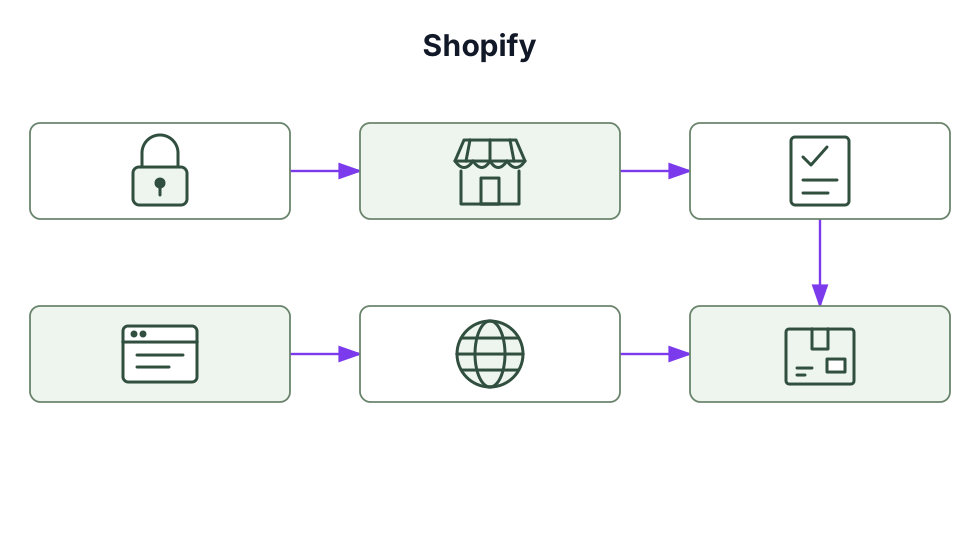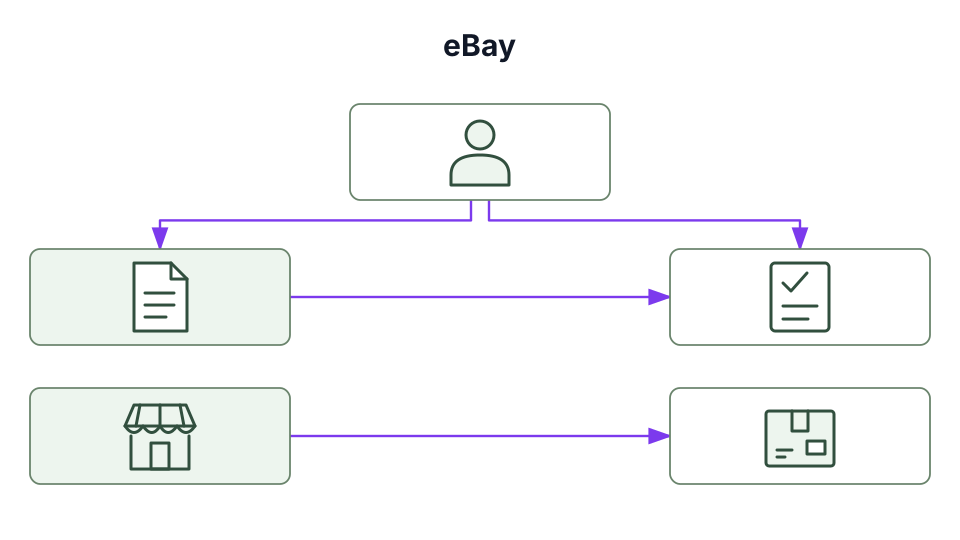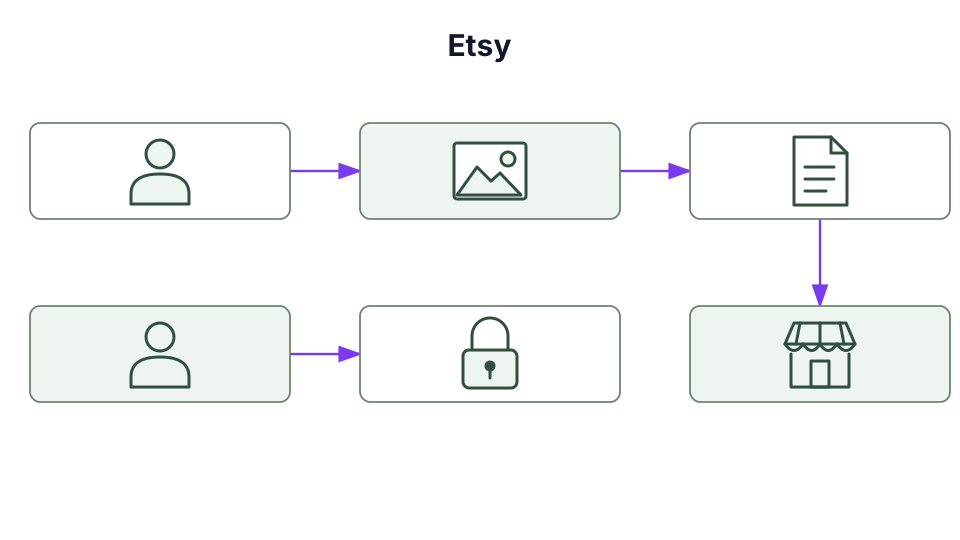
The site loads but seller features are unavailable
Check: Account, store, marketplace and member role.
Next action: Fix permissions at the account level first, then look at the network.
Keep seller backends stable on fixed static IPs; see real storefront prices, stock and ad slots by city with rotating residential exits.
Scroll horizontally with the arrow keys to read all content.
| Criterion | Recommended exit | What matters |
|---|---|---|
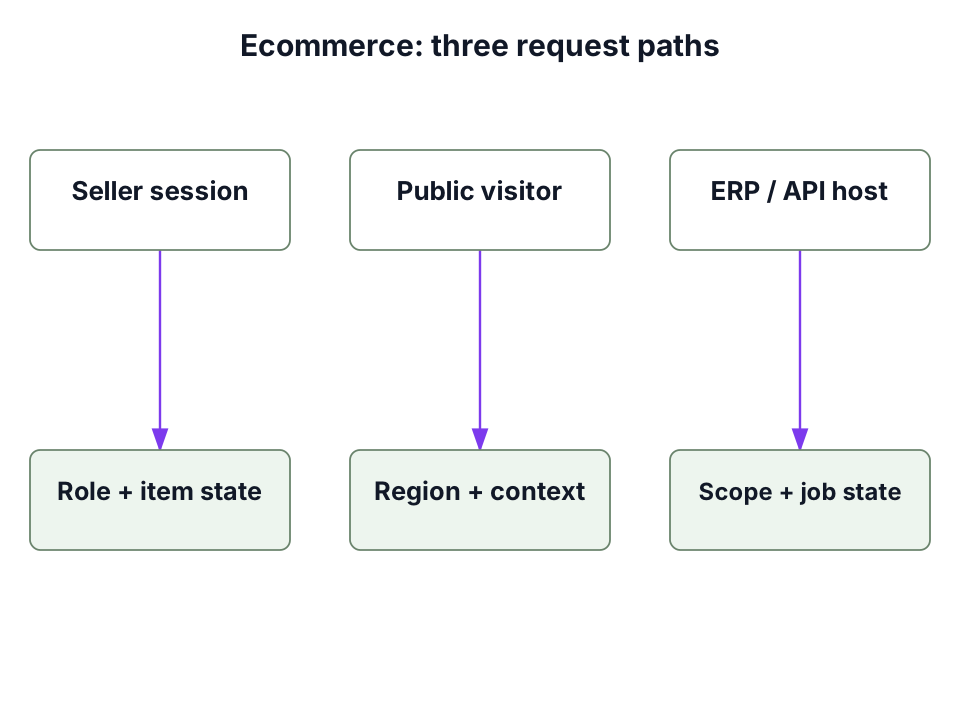
| Store back-office | Static ISP, one IP per store | The back-office signs in from the same region and exit every time — stable, and clear for team handoffs. |
| Checking regional storefronts | Rotating residential by country / city | See prices, stock, delivery and ad slots on a local residential IP, just like local shoppers do. |
| ERP / API sync | Datacenter or static ISP | Configure it on the server that runs the job; use a fixed IP for allowlists. |
Fixed exits for the back-office, rotating exits for research — keep the two in separate browser environments.
When comparing across regions, record marketplace, store, item / SKU, variant, delivery destination, currency and time. Price differences only mean something when those conditions match.
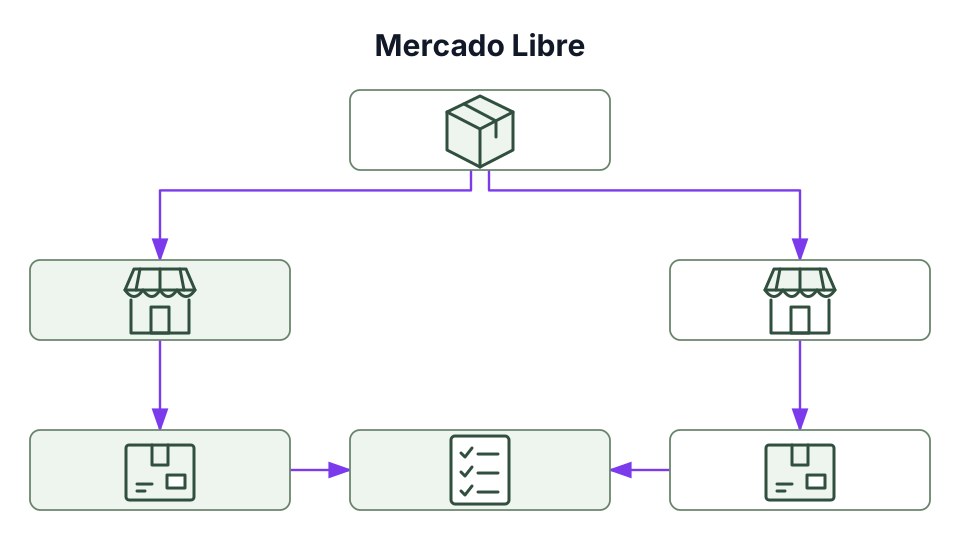
Shopify Markets changes what visitors see by market; Amazon Seller Central is a separate seller back-office; Mercado Libre Global Selling distinguishes global and site-specific item IDs. Knowing this tells you which fields each record needs.

Give each store its own static ISP, bind it to an antidetect browser or a dedicated browser profile, and sign in to the back-office only from there.
Expected result: Every store has a fixed, traceable sign-in environment.
Use a separate browser profile on rotating residential for price and ad checks, switching by target country or city.
Expected result: Research never touches store operations.
Copy protocol, host, port and credentials into the browser or client; configure ERP jobs separately on the server.
Expected result: Every program uses the intended exit.
Confirm the exit country with an IP check, then open the store or product page and confirm currency and destination. If an important action fails, check the existing record before retrying.
Expected result: Correct exit, traceable actions.
Store back-offices run on static ISP, billed by IP count and term, so costs are predictable. Storefront research runs on rotating residential, billed by traffic. Each platform page has a configuration entry with recommended settings you can adjust before ordering.
For large-scale, ongoing stock and order sync, the platform's official API comes first. Proxies are built for the work that needs a local view: store operations and regional research.
Check: Account, store, marketplace and member role.
Next action: Fix permissions at the account level first, then look at the network.
Check: Variant, seller, currency, destination, promotion and time.
Next action: Lock those conditions and compare again.
Check: Open the back-office and check the draft, order or job status.
Next action: Retry only after confirming the status, to avoid duplicates.
Check: Is the proxy and authorization configured on the job's server?
Next action: Configure and test it on the server itself.
We recommend it. One static ISP per store keeps the back-office environment clean and makes handoffs and troubleshooting simpler.
What local shoppers saw at a given time — price, stock, delivery and ad placement — a solid reference for competitor and pricing decisions.
Amazon, Shopify, TikTok Shop, Shopee, eBay and more each have a page with the recommended exit, setup steps and common issues.
Dedicated static residential IPs for Amazon Seller Central accounts in the US, UK, Germany and Japan, plus rotating residential for product and price research from US$1.50/GB.
View options and pricingCompare regional storefronts in a clean visitor session, alongside a separate record of Markets settings.
View options and pricingRun each eBay seller account on its own static residential IP in the US, UK or Germany. Avoid linked-account suspensions; rotating residential for price research from US$1.50/GB.
View options and pricingCheck maker claims, image rights and buyer-facing details without confusing a public team biography with shop access.
View options and pricingReview a specific shop and variation, preserve campaign timing, and check the existing save before retrying.
View options and pricingKeep country, shop and variation in each row, with seller state and public display checked independently.
View options and pricingHold the seller and variant steady while recording destination, currency, quantity and promotion conditions.
View options and pricingCheck the operator’s Seller Center role separately from company contacts and API credentials, then inspect the correct public offer.
View options and pricingMap a global CBT item to each destination-site item, then record that local page’s currency and delivery context.
View options and pricingRun TikTok Shop seller and creator accounts from a static residential IP in the US, UK or Southeast Asia. One IP per shop, HTTP or SOCKS5, no linked stores.
View options and pricingOfficial documentation · Checked:
Official documentation · Checked:
Official documentation · Checked:
Create an account, top up once and pick an exit in 195+ countries — residential, static ISP or datacenter.