“Everything is connected” but values differ
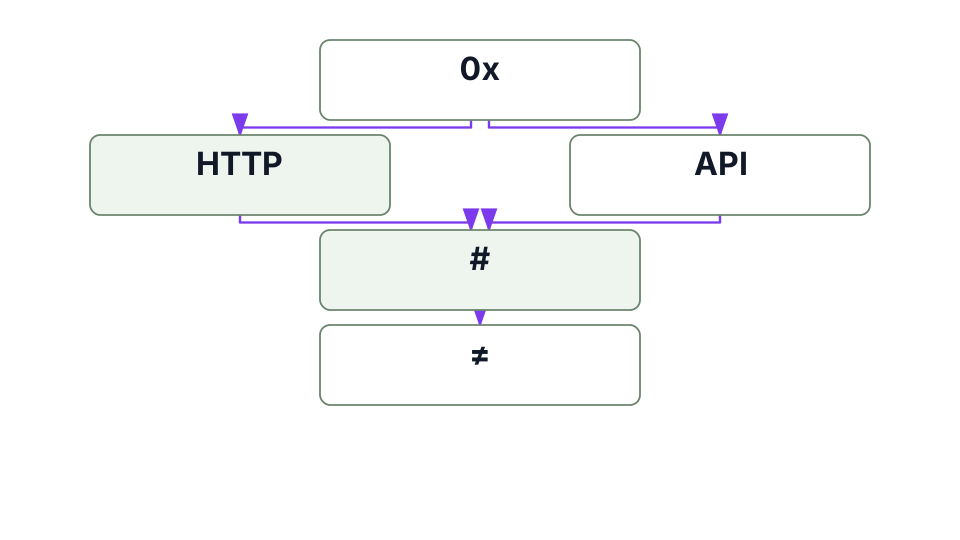
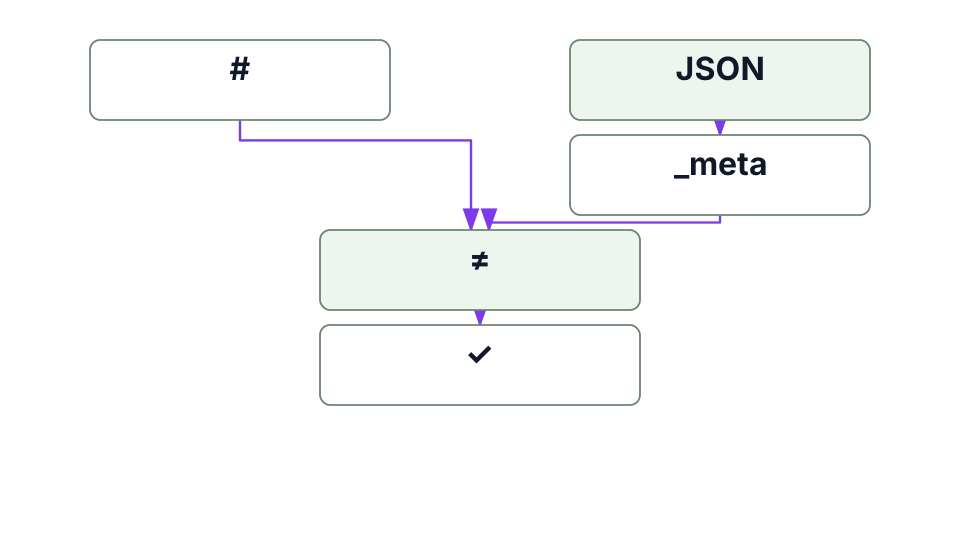
Check: Check whether the observations refer to the same chain, entity and block.
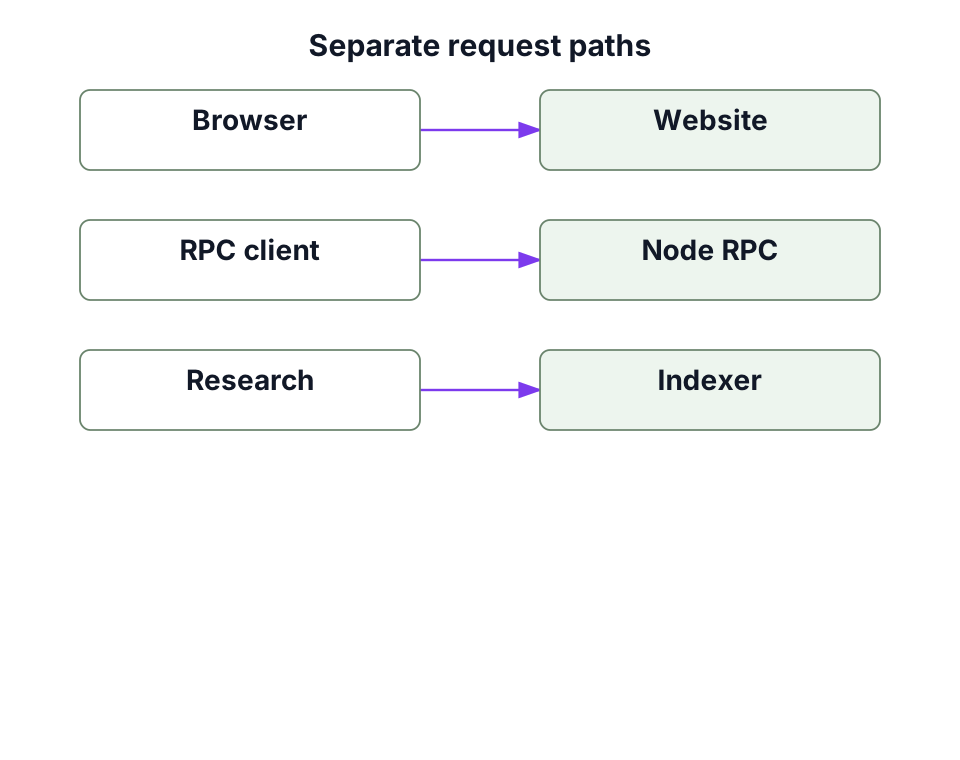
Next action: Keep separate records for page, RPC and indexer; do not merge them into one success flag.
Configure the right proxy route for wallet activity, RPC access, explorers and on-chain data collection.
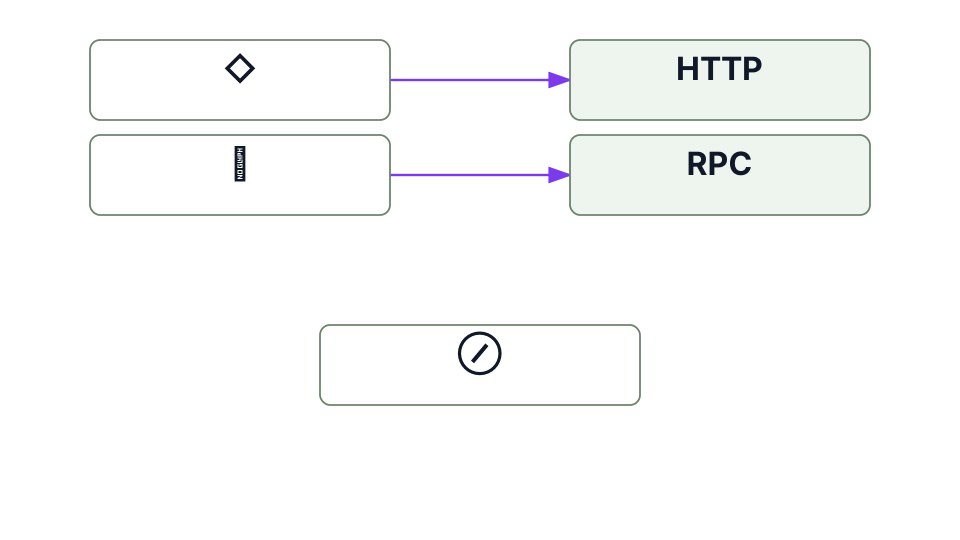
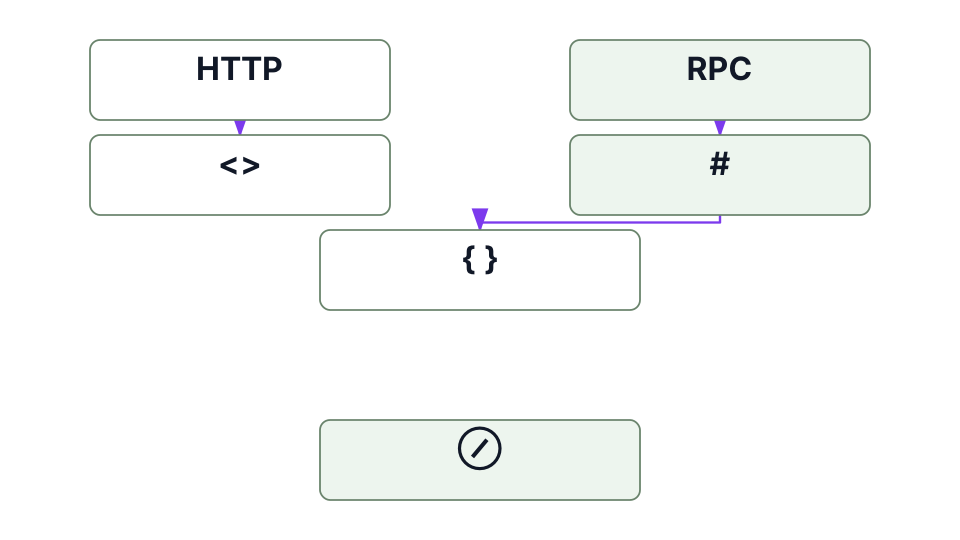
For a page that loads but shows no data, identify who retrieves the missing value: the browser, wallet extension, application backend or a scheduled worker. One successful browser request does not show where the other clients send traffic.
Use the guides below to choose the right evidence. RPC checks need a chain and block; indexer checks need a deployment and indexed context. Community access has a separate eligibility boundary. Proxy302 provides proxy configuration options, not RPC nodes or wallet permissions.
Scroll horizontally with the arrow keys to read all content.
| Criterion | What to check | Next action |
|---|---|---|
| Wallet interface | Page loading, provider presence and account access separately | Use the wallet workflow; stop before permission prompts. |
| RPC or development client | Expected chain, response envelope and block identity | Try the bounded read-only example before any remote test. |
| Indexer / research feed | Deployment, entity, block and capture time | Repair data context or wait for indexing before rerouting. |
| Public reading | Exact URL, client, time and allowed comparison route | Compare only the failing client when site policy permits. |
When the direct route works and you have no regional or routing requirement, a proxy adds another component to diagnose.

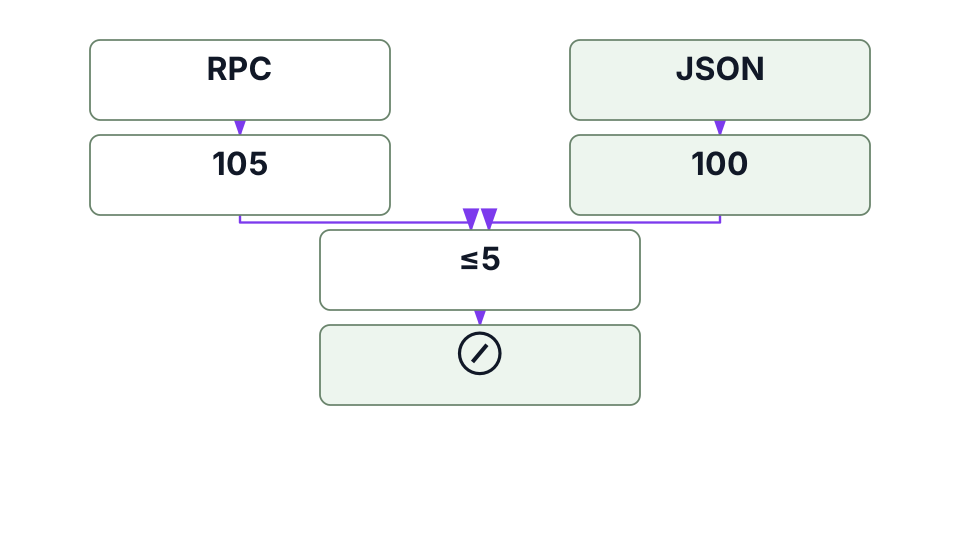
Write one concrete symptom, such as “pool data stays at block 100 while the reference head is 105.” Keep it separate from “the page will not load.”
Record the application component, endpoint host and protocol without API keys. Do not assume extension traffic follows browser-page proxy settings.
Keep chain, contract or pool, block selection, request body and client version fixed. Compare direct versus an authorized alternate route only when transport is the suspected fault.
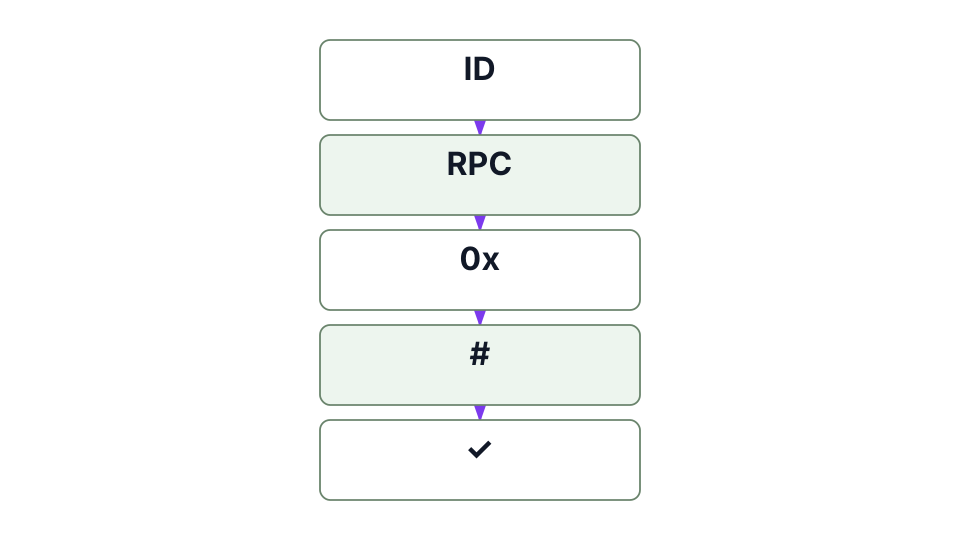
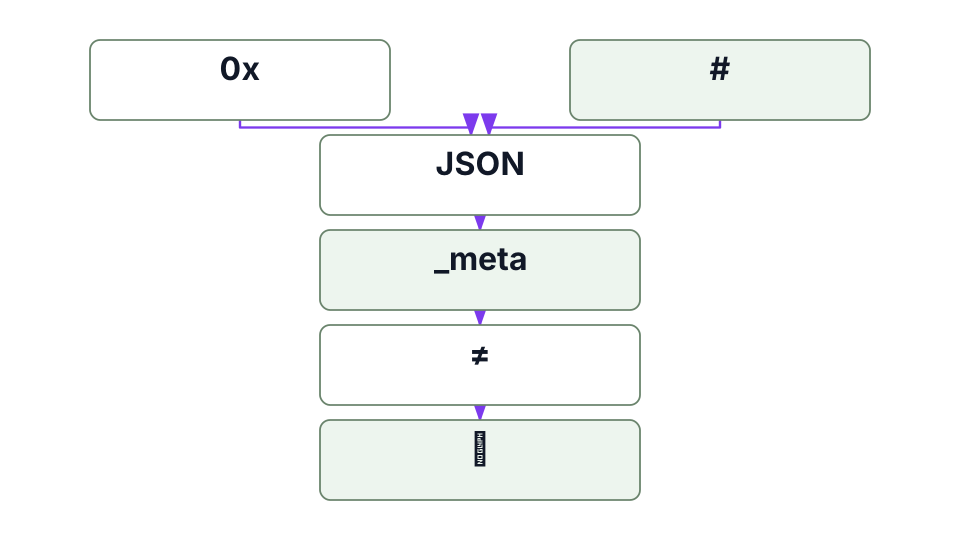
HTTP success can contain a JSON-RPC error or GraphQL errors. A syntactically valid response can still belong to another chain, deployment or block.
A useful incident record contains: symptom; request owner; redacted endpoint; method or query name; expected chain and entity; block number/hash where relevant; capture time; HTTP status; protocol error code; and the action taken. Never attach private keys, seed phrases, session tokens or full credential-bearing URLs.
Example triage: a page returns 200, the RPC says chain 0x1, and an indexer is behind the required block. The page route is reachable; the indexer has not yet supplied the required data. This paper example supplies no evidence about a live provider or regional exit.
Check: Check whether the observations refer to the same chain, entity and block.
Next action: Keep separate records for page, RPC and indexer; do not merge them into one success flag.
Check: Check the provider’s plan, permissions and documented retry guidance.
Next action: Reduce load or resolve authorization with the provider.
Stop when: Do not rotate exits to bypass the restriction.
Use datacenter configuration for an authorized developer client only if the destination accepts that path. Residential research settings may be relevant to permitted public-page comparisons; static ISP settings can preserve a chosen browser exit. None changes gas, on-chain identity, voting power or provider quotas.
For local development and already-working direct reads, keep the simpler direct path. Choose a guide below to establish the missing evidence first.
Ten separate tasks, with different inputs, stop conditions and evidence.
Diagnose a loaded dApp, missing provider and chain connectivity without requesting account access.
View options and pricingTest a read-only state adapter with local RPC responses while keeping browser assets and wallet permissions separate.
View options and pricingRun a local read-only JSON-RPC check that rejects error envelopes, wrong chains and mismatched blocks.
View options and pricingCompare explorer observations with a chain, transaction or contract identifier and a recorded block context.
View options and pricingReject GraphQL errors, indexing errors and a mismatched deployment or block in a local read-only example.
View options and pricingValidate a fixed historical snapshot’s context, then measure its age against a reference head before interpreting it.
View options and pricingVerify a pool, token pair, fee tier and indexed block using a synthetic read-only GraphQL example.
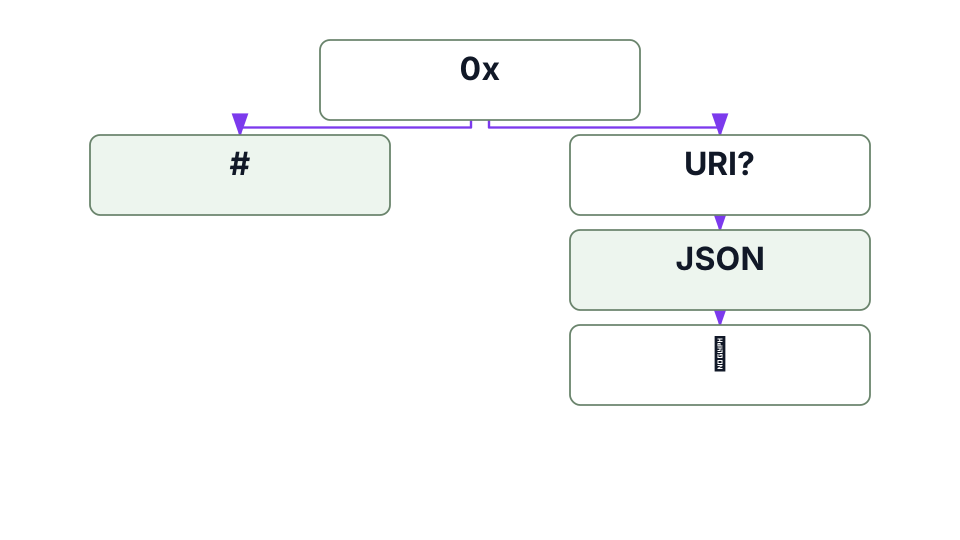
View options and pricingTrace chain, contract and token ID through optional metadata without treating a loaded image as ownership proof.
View options and pricingBuild a read-only support record from the space, proposal, snapshot and strategy before changing a browser route.
View options and pricingUse a local read-only fixture to detect a wrong chain or block before planning public-testnet work.
View options and pricingOfficial documentation · Checked:
Official documentation · Checked:
Official documentation · Checked:
Create an account, top up once and pick an exit in 195+ countries — residential, static ISP or datacenter.